




AI Agents: How They Will Reshape Jobs Across Africa
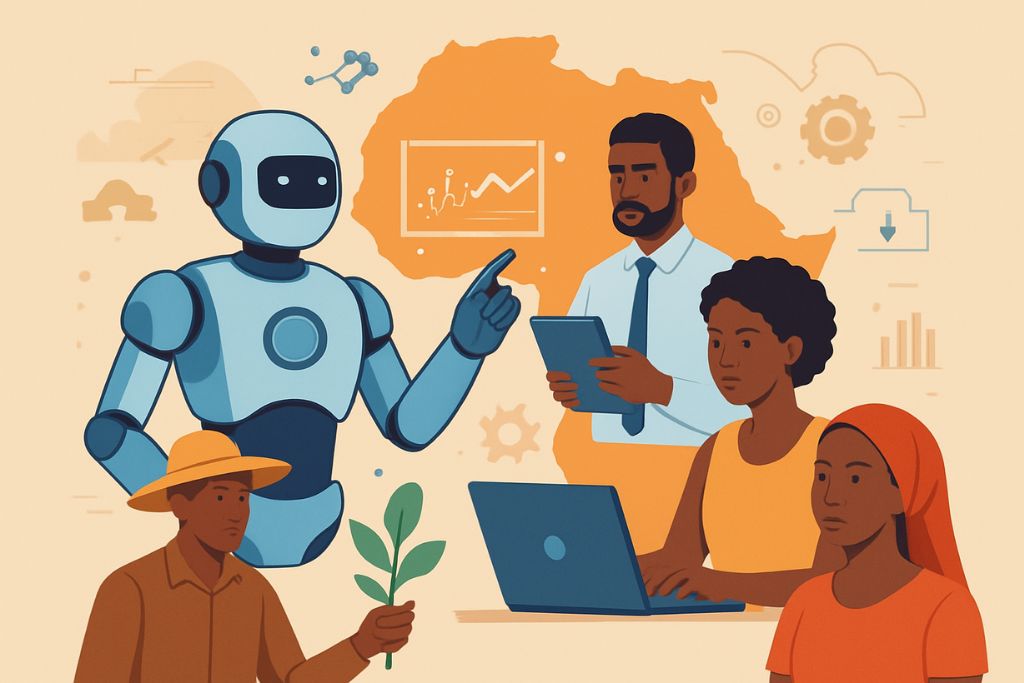
Artificial Intelligence is evolving fast, but one technology stands out for its potential to transform Africa’s workforce: AI Agents. These are autonomous, goal-driven systems that can think, plan, and execute tasks with minimal human input. As Africa continues to embrace digital transformation, they are poised to reshape industries, unlock new opportunities, and redefine how millions of Africans work.
This article explores how AI agents will impact jobs across Africa—what roles they will replace, what jobs they will create, and how individuals, businesses, and governments can prepare.
What Are AI Agents?
AI agents are advanced software systems that can:
- Analyze data
- Make decisions
- Complete tasks automatically
- Interact with users and systems
- Learn and improve over time
They are far more powerful than regular automation tools or simple chatbots. Think of them as digital employees—able to run errands, complete multiple-step workflows, or even manage entire processes end-to-end.
Why AI Agents Are Perfect for Africa
Africa has a unique combination of factors that make them especially valuable:
✔ Growing young population hungry for tech opportunities
✔ Rapid adoption of mobile phones and digital tools
✔ Shortage of skilled labor in areas like healthcare, engineering, and finance
✔ High operational costs for SMEs and startups
✔ A booming fintech and digital economy
They can help bridge talent gaps, automate repetitive tasks, and support small and large businesses across the continent.
Industries in Africa That Will Be Transformed by AI Agents
1. Banking & Fintech
Africa leads in mobile money and fintech innovation. AI agents will:
- Detect fraud in real time
- Automate loan approvals
- Handle customer queries 24/7
- Provide personalized financial advice
- Improve KYC/AML verification
Impact: Faster services, better fraud prevention, and more financial inclusion.
2. Agriculture
With 60% of Africa’s workforce in agriculture, AI agents can boost productivity by:
- Monitoring crop health
- Predicting rainfall and pests
- Optimizing fertilizer and irrigation
- Managing supply chains
Impact: Higher yields, reduced losses, and better market access for farmers.
3. Healthcare
Africa faces healthcare worker shortages. AI agents can:
- Manage patient records
- Assist in diagnostics
- Automate appointment scheduling
- Support telemedicine platforms
- Provide health education through WhatsApp and SMS
Impact: Better access to care, faster patient processing, and reduced administrative burden.
4. Education
They will reshape learning by:
- Personalizing lessons
- Automating marking and assignments
- Helping teachers design study materials
- Offering tutoring via mobile phones
Impact: More accessible education, especially in rural areas.
5. E-commerce & Retail
African online shopping is growing rapidly. AI agents will:
- Automate order processing
- Manage logistics and delivery
- Recommend products
- Handle customer service
- Analyze demand and pricing
Impact: Faster delivery, fewer errors, and improved customer experience.
Will They Replace Jobs in Africa?
Yes and no.
Jobs at risk of automation include:
- Data entry
- Customer support
- Cashiers
- Basic administrative work
- Telemarketing
- Routine accounting tasks
These roles involve repetitive work—something AI agents excel at.
Jobs That AI Agents Will Create in Africa
AI agents will generate millions of new roles, such as:
✔ AI Agent Supervisors
✔ AI Workflow Designers
✔ Prompt Engineers
✔ Data Analysts & Data Collectors
✔ Digital Product Owners
✔ Cybersecurity Specialists
✔ AI Trainers (for language, cultural nuances, industry-specific tasks)
✔ Automation Consultants for SMEs
These jobs require human oversight, creativity, cultural understanding, and strategy—skills AI cannot replicate.
How African Youth and Professionals Can Prepare
To stay relevant, Africans should focus on skills that complement AI:
1. Digital Literacy
Basic ability to use AI tools, devices, and digital platforms.
2. Data Skills
Data entry may disappear, but data analysis will grow.
3. Creativity & Critical Thinking
AI executes tasks—humans provide direction.
4. Soft Skills
Communication, leadership, and problem-solving will be more valuable.
5. AI & Automation Skills
Learning to deploy, manage, and prompt AI agents.
How African Businesses Should Prepare
Businesses in Africa, from startups to corporates, should:
- Automate repetitive tasks
- Train employees to work alongside AI
- Adopt AI tools for finance, marketing, HR, and customer service
- Invest in cybersecurity
- Start small (pilot projects) and scale gradually
Companies that embrace AI early will outperform those that wait.
What Governments Must Do
African governments need to:
- Create AI policies and regulations
- Invest in broadband and digital infrastructure
- Support AI education and training programs
- Encourage local innovation
- Provide grants for AI startups
Nations that invest in AI will see rapid GDP growth and improved public services.
AI Agents Will Reshape Africa—But for the Better
They will not destroy Africa’s workforce—they will transform it. They will take over repetitive tasks, reduce costs, improve service delivery, and unlock new opportunities for millions of Africans.
The future of work in Africa is AI-assisted, not AI-replaced.
Africa has a chance to leapfrog the world by adopting AI agents early. The question is not if AI agents will reshape jobs across Africa—but how fast we are willing to adapt.
You may be interested in: Generative AI & Hyper-Intelligent Automation
