



Tier 1 vs Tier 3 IT Support
What Level of Technical Infrastructure Does Your Business Need?
Every business depends on technology, but not every business needs the same level of IT support. A small accounting firm with fifteen employees has very different technical demands from a hospital, a manufacturing company, or a fast-growing fintech startup. Yet many organizations either overspend on support they rarely use or underestimate the complexity of the systems they rely on.
The result is familiar. Slow response times, recurring technical issues, frustrated employees, and unexpected downtime begin to affect productivity. Eventually, technology stops being a business advantage and becomes a daily source of disruption.
Understanding the difference between Tier 1 and Tier 3 IT support (Tier 1 and Tier 3 IT support) can help you invest wisely and build an infrastructure that actually matches your business needs.
What Is IT Support?
IT support refers to the technical services that help businesses maintain, troubleshoot, and optimize their technology. This includes everything from resetting passwords and fixing software issues to managing cloud infrastructure, servers, cybersecurity, and complex network architecture.
To make support more efficient, organizations typically divide technical assistance into different levels, commonly called tiers. Each tier handles a different degree of technical complexity.
What Is Tier 1 IT Support?
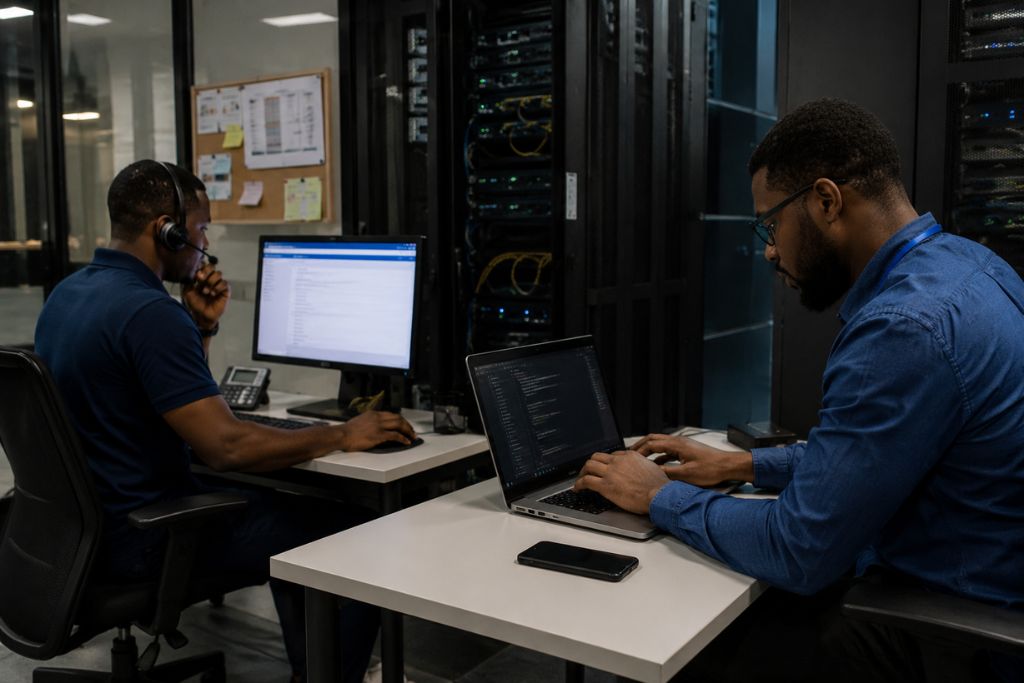
Tier 1 is the first point of contact whenever employees experience technical problems. These support professionals handle routine issues that occur every day across most organizations.
Typical Tier 1 responsibilities include:
- Password resets
- Printer and peripheral troubleshooting
- Email configuration
- Software installation
- Basic hardware diagnostics
- Internet connectivity problems
- User account management
Think about an employee who cannot log into Microsoft 365 before an important client meeting. A Tier 1 technician can usually resolve the problem within minutes by verifying credentials, resetting passwords, or identifying a simple configuration issue.
Many businesses discover that a large percentage of support requests never become more complicated than this. That’s why Tier 1 support plays such an important role in maintaining day-to-day productivity.
What Is Tier 2 Support?
Although the spotlight often falls on Tier 1 and Tier 3, Tier 2 deserves some attention because it bridges the gap between basic troubleshooting and advanced engineering.
Tier 2 specialists investigate issues that require deeper technical expertise, such as:
- Software configuration problems
- Network troubleshooting
- Operating system errors
- Application compatibility issues
- Device performance optimization
If a problem cannot be solved using standard troubleshooting procedures, it typically moves to Tier 2 for further investigation.
You might be interested in: Understanding the three levels of IT support
What Is Tier 3 IT Support?
Tier 3 represents the highest level of technical expertise within an IT support structure.
These professionals are engineers, infrastructure architects, cloud specialists, cybersecurity experts, and system administrators who resolve highly technical problems.
Their responsibilities often include:
- Server infrastructure management
- Cloud migration
- Cybersecurity incident response
- Database optimization
- Network architecture
- Enterprise software deployment
- Disaster recovery planning
- Performance engineering
Imagine an online retailer whose website suddenly crashes during a Black Friday sales campaign. The issue turns out to involve server resource allocation, database bottlenecks, and cloud scaling policies. That is far beyond what a help desk can solve.
Tier 3 engineers investigate system logs, adjust infrastructure, restore services, and identify the underlying cause to prevent future failures.
Tier 1 vs Tier 3 IT Support
Although both serve the same organization, their responsibilities differ significantly.
| Tier 1 IT Support | Tier 3 IT Support |
|---|---|
| Handles routine technical requests | Solves highly complex infrastructure problems |
| Works directly with end users | Works mainly behind the scenes |
| Uses established troubleshooting procedures | Designs and develops technical solutions |
| Resolves common software and hardware issues | Manages enterprise infrastructure and cloud environments |
| Escalates unresolved cases | Receives escalated technical incidents |
Rather than competing, these support levels complement one another. Efficient organizations rely on both to keep technology running smoothly.
How Do You Know Which Level Your Business Needs?
The answer depends less on company size and more on technical complexity.
A small business operating with cloud-based email, accounting software, and standard office equipment may only require dependable Tier 1 support combined with occasional specialist assistance.
However, the picture changes when your organization depends on:
- Multiple business applications
- Cloud infrastructure
- Remote workforce management
- Sensitive customer data
- Online payment systems
- High system availability
- Regulatory compliance
In these environments, advanced technical expertise becomes essential rather than optional.
Why Growing Businesses Need More Than Basic Support
Growth introduces complexity that isn’t always obvious at first.
As more employees join, devices multiply, software subscriptions expand, and cybersecurity risks increase. What once felt manageable gradually becomes difficult to oversee.
A business with five computers may function comfortably with reactive support. A business operating across several locations with cloud servers, remote teams, and customer databases needs proactive infrastructure management instead.
That’s often where organizations experience growing pains. They continue operating with entry-level support while expecting enterprise-level reliability.
The Cost of Choosing the Wrong Support Model
Technical downtime carries real financial consequences.
Employees lose productive hours. Customers experience service interruptions. Sales opportunities disappear. In some industries, security breaches can even result in regulatory penalties and damaged reputation.
The challenge is that these costs rarely appear all at once. Instead, they accumulate through recurring technical issues, delayed projects, and frustrated staff.
Investing in the appropriate level of IT support helps reduce those risks while allowing internal teams to focus on business growth instead of constant troubleshooting.
Building an IT Strategy That Supports Growth
Technology should make business operations simpler, not more complicated.
Choosing the right support model means evaluating your infrastructure, understanding your operational risks, and planning for future expansion. There isn’t a universal answer because every business has different priorities, budgets, and technical requirements.
Some organizations only need responsive day-to-day support. Others require continuous infrastructure monitoring, cybersecurity management, cloud administration, and strategic IT planning.
The key is finding a solution that scales with your business rather than one that only solves today’s problems.
Final Thoughts
Reliable IT support is no longer just about fixing computers when something goes wrong. It has become a strategic investment that influences productivity, security, customer experience, and business continuity.
Whether your organization needs responsive Tier 1 assistance, advanced Tier 3 engineering expertise, or a combination of both, (Tier 1 vs Tier 3 IT support), the right support structure can significantly reduce downtime while creating room for sustainable growth.
At GreenWare Tech Academy, we go beyond technical training by providing dependable IT support solutions tailored to businesses of every size. From everyday technical assistance to advanced infrastructure management, cloud solutions, cybersecurity, and enterprise IT consulting, our team helps organizations build resilient technology environments that support long-term success.
