

E-Commerce Web Design & Nigerian Checkout Drop-offs
Few things are more frustrating for an online business than watching customers fill their shopping carts, proceed to checkout, and then disappear without completing the purchase.
For many Nigerian businesses, checkout abandonment has become one of the biggest obstacles to growing online sales. Marketing campaigns bring visitors to the website, products attract attention, yet revenue still falls short because buyers leave at the final stage.
Pricing sometimes plays a role. So does trust. However, web design deserves far more attention than it usually receives.
A poorly designed checkout experience can quietly push customers away, even when they genuinely want to complete their purchase.
What Are Checkout Drop-offs?
A checkout drop-off happens when a customer begins the payment process but exits before placing the order.
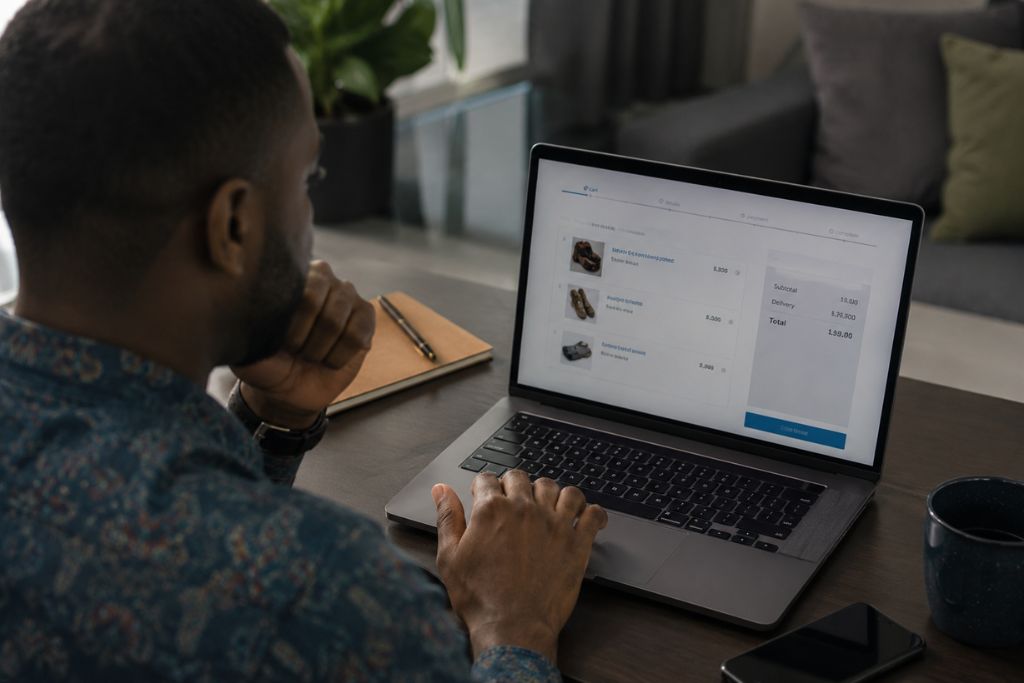
Imagine someone shopping for a laptop bag during a lunch break. They add the item to their cart, enter their delivery information, and suddenly face a lengthy registration form, unclear shipping fees, or a payment page that loads slowly.
Rather than waiting, they close the browser and promise themselves they’ll return later. Often, they never do.
Multiply that scenario across hundreds or thousands of visitors each month, and the financial impact becomes significant.
Why Nigerian Consumers Abandon Online Checkouts
The Nigerian e-commerce landscape presents unique challenges.
Internet speeds vary considerably between locations. Mobile devices account for a large percentage of online shopping. Payment preferences differ from customer to customer, and trust remains a deciding factor for many first-time buyers.
Because of these realities, even small design decisions can influence purchasing behaviour.
Some of the most common reasons customers leave include:
- Slow-loading checkout pages
- Poor mobile responsiveness
- Hidden delivery charges
- Limited payment options
- Complicated forms
- Website security concerns
- Unexpected account creation requirements
None of these issues necessarily reflects the quality of the product. Instead, they create enough friction for shoppers to reconsider the purchase.
Mobile-First Design Matters More Than Ever
Many Nigerian consumers complete purchases using smartphones rather than desktop computers.
That changes how websites should be designed.
Buttons need to be large enough for touch navigation. Forms should require minimal typing. Images must load quickly without reducing quality, and checkout pages should adapt seamlessly across different screen sizes.
A desktop experience simply squeezed onto a mobile screen rarely delivers good results.
Speed Directly Influences Sales
People don’t enjoy waiting for websites to load.
While a few seconds might seem insignificant to a business owner testing a website over high-speed office internet, the experience can be completely different for someone browsing on a slower mobile network.
Each additional delay increases the likelihood that a shopper will leave before completing payment.
Optimized images, efficient coding practices, content delivery optimization, and quality hosting all contribute to faster page performance.
Simplicity Wins
Some businesses unintentionally make checkout more difficult than necessary.
Customers may be asked to create accounts, answer unnecessary questions, or complete multiple pages before reaching payment.
Every extra step introduces another opportunity to abandon the purchase.
Instead, successful checkout experiences typically focus on simplicity.
Request only the information needed to process the order. Present a clear summary of costs. Display delivery expectations early. Make the payment process feel predictable rather than confusing.
Trust Is Part of Good Design
Design isn’t only about appearance.
It also communicates credibility.
Clear contact information, recognizable payment gateways, secure HTTPS connections, customer reviews, transparent return policies, and professional layouts all reassure buyers that they’re dealing with a legitimate business.
For first-time customers especially, confidence often determines whether they proceed with payment.
Payment Flexibility Improves Conversion
Not every customer prefers the same payment method.
Some rely on debit cards. Others prefer bank transfers, digital wallets, or alternative payment services.
Offering multiple secure payment options reduces unnecessary barriers during checkout.
The goal isn’t to overwhelm customers with endless choices but to accommodate the payment habits of your target audience.
Test the Checkout Like a Customer
Business owners sometimes know their websites too well.
After months of working on a project, they instinctively know where everything is located. New visitors do not.
One useful exercise involves asking someone unfamiliar with the website to complete a purchase while observing where they hesitate.
You might discover confusing navigation, unclear instructions, or technical problems that never appeared during internal testing.
Those small observations often reveal surprisingly valuable improvements.
Better Design Leads to Better Business Results
Improving checkout performance doesn’t always require a complete website redesign.
Sometimes relatively modest adjustments make a noticeable difference.
Simplifying forms, improving mobile responsiveness, increasing page speed, clarifying pricing, strengthening security indicators, and reducing unnecessary steps can collectively improve conversion rates.
No single design change guarantees success. Customer behaviour is influenced by many factors, including price, competition, and product availability. Even so, removing avoidable friction gives shoppers fewer reasons to leave before completing their purchase.
Final Thoughts
An effective e-commerce website does far more than showcase products. It guides customers confidently from product discovery to successful payment without introducing unnecessary obstacles along the way.
Businesses that prioritize fast loading speeds, intuitive navigation, mobile optimization, and trustworthy checkout experiences are generally better positioned to convert visitors into paying customers, particularly within Nigeria’s rapidly expanding digital economy.
At GreenWare Tech Academy, we help businesses create high-performing e-commerce web design solutions that improve user experience, reduce checkout abandonment, and increase online conversions. Whether you’re launching a new online store or optimizing an existing one, our team delivers practical web design strategies built around how real customers browse, shop, and buy.

Author