






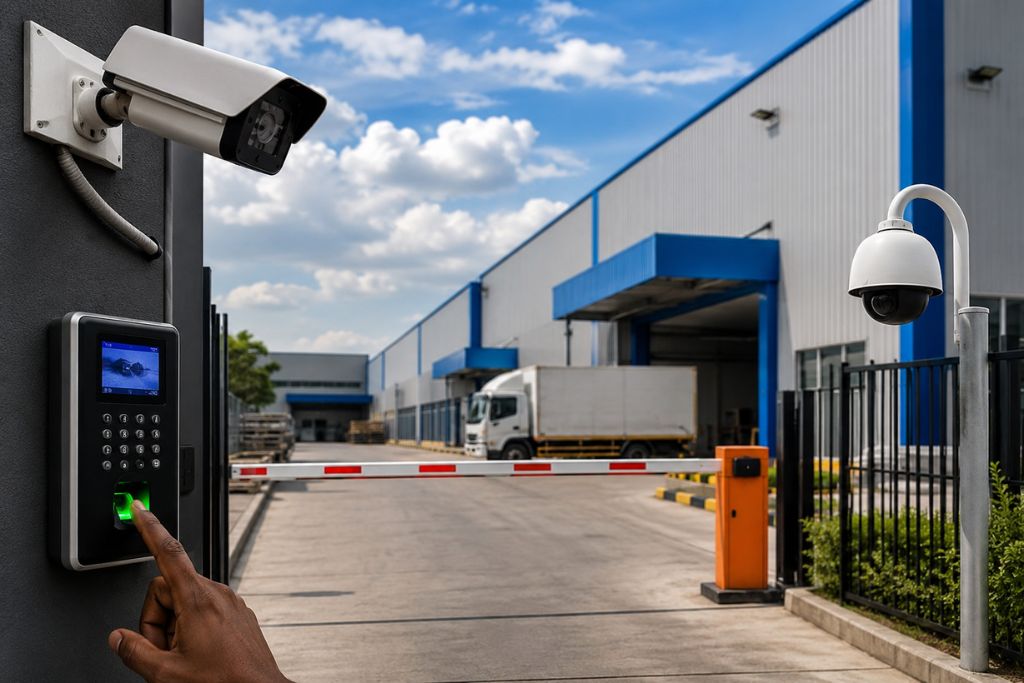
Electronic Security Checklist For Warehouses & Estates (2026)
The Ultimate Electronic Security Checklist for Warehouses and Estates in 2026
Walk into a modern warehouse today and you’ll notice something different. Security is no longer just about tall fences, heavy gates, or a lone security guard making rounds with a flashlight. The same shift is happening across residential estates. Technology has quietly taken over many of the tasks that once depended entirely on human vigilance.
That change didn’t happen simply because technology became more advanced. Crime evolved as well. Organized theft, unauthorized access, cyber attacks targeting smart devices, and insider threats have made traditional security systems less reliable on their own. A warehouse storing millions of naira worth of inventory or a residential estate housing hundreds of families cannot afford weak security gaps anymore.
Yet many property owners still assume installing a few CCTV cameras is enough. It rarely is.
A truly effective electronic security system works like a team. Every component supports another, creating multiple layers of protection rather than relying on one device to do everything.
Here’s the checklist worth reviewing before 2026 gets even busier.
1. Install AI-Powered CCTV Cameras
CCTV remains the foundation of electronic security, but today’s systems are significantly smarter.
Modern cameras don’t just record footage. Many can recognize suspicious movement, identify abandoned objects, detect unusual behaviour, and immediately alert security personnel.
Instead of spending hours reviewing recordings after an incident, operators receive notifications while something is actually happening.
Consider a warehouse loading bay operating late into the evening. If someone enters a restricted zone outside approved working hours, the surveillance system can immediately notify the control room instead of waiting until morning.
Look for features like:
- 4K video resolution
- Night vision
- Motion analytics
- AI object detection
- Cloud and local storage
- Remote monitoring
2. Secure Every Entry Point with Smart Access Control
Keys have served businesses for decades, but they introduce one unavoidable problem.
Once copied, they’re almost impossible to track.
Smart access systems solve that issue by recording every entry and exit.
Options include:
- Biometric fingerprint scanners
- Facial recognition terminals
- RFID access cards
- Mobile phone credentials
- PIN authentication
For residential estates, access control also simplifies visitor management. Delivery drivers, contractors, and temporary guests can receive time-limited digital access instead of unrestricted entry.
3. Integrate Alarm Systems
An alarm system should never operate independently.
Instead, connect it with CCTV cameras, access control devices, lighting systems, and emergency notifications.
If someone attempts forced entry into a warehouse after business hours, several actions can happen simultaneously:
- Sirens activate.
- Security personnel receive alerts.
- Cameras begin focused recording.
- Outdoor lights switch on.
- Management receives mobile notifications.
That coordinated response often discourages intruders before significant damage occurs.
4. Use Perimeter Detection Technology
Many incidents begin before criminals reach the building itself.
Electronic perimeter protection adds another layer.
Popular options include:
- Infrared beam sensors
- Electric fencing with monitoring
- Vibration sensors
- Ground radar systems
- Smart perimeter cameras
Large industrial facilities benefit particularly from these technologies because perimeter breaches can be detected several metres before doors or windows are touched.
5. Upgrade Outdoor Lighting
Lighting might sound old-fashioned compared to artificial intelligence, yet it remains one of the most practical security investments.
Dark corners create opportunities.
Smart lighting systems can now:
- Detect movement
- Adjust brightness automatically
- Integrate with surveillance cameras
- Operate remotely
- Reduce electricity consumption
A well-lit warehouse compound often discourages opportunistic criminals before they attempt anything.
6. Protect Your Network
Here’s something people occasionally overlook.
Every internet-connected camera, access controller, and smart sensor is also a network device.
Without proper cybersecurity, attackers may never need to climb a fence. They could simply compromise the system remotely.
Basic security should include:
- Strong passwords
- Multi-factor authentication
- Encrypted communications
- Firewall protection
- Firmware updates
- Network segmentation
Ignoring cybersecurity undermines the entire electronic security investment.
7. Backup Your Surveillance Data
Imagine discovering valuable footage disappeared because a hard drive failed.
Unfortunately, that still happens.
A stronger approach combines:
- Local Network Video Recorders (NVRs)
- Cloud storage
- Redundant backups
- Automatic data retention policies
Multiple backups reduce the chances of losing critical evidence.
8. Install Environmental Monitoring
Warehouses face risks beyond theft.
Fire, flooding, overheating, and equipment failure can cause equally severe losses.
Environmental sensors monitor:
- Smoke
- Heat
- Water leaks
- Humidity
- Power failures
Early warnings often prevent relatively small incidents from becoming expensive disasters.
9. Enable Mobile Monitoring
Managers don’t spend every hour on-site.
Fortunately, they don’t need to.
Modern security platforms allow authorized personnel to:
- Watch live video
- Unlock or lock entrances
- Receive instant alerts
- Review recordings
- Generate reports
Having visibility from anywhere significantly improves response times.
You might also be interested in: Launch Your Tech Career with Zero Experience in Lagos
10. Schedule Regular Maintenance
Even advanced technology deteriorates without maintenance.
Dirty camera lenses, outdated software, damaged cables, and weak backup batteries gradually reduce reliability.
A maintenance schedule should include:
- Camera cleaning
- Software updates
- Battery testing
- Sensor calibration
- Network health checks
- System performance audits
Routine maintenance often costs far less than recovering from a security failure.
Don’t Forget Staff Training
Technology only performs as well as the people using it.
Employees should understand:
- Emergency procedures
- Access control policies
- Visitor verification
- Password security
- Suspicious activity reporting
Even sophisticated AI systems cannot replace informed human judgment.
Looking Ahead
Electronic security in 2026 is becoming more predictive than reactive.
Artificial intelligence, cloud computing, edge processing, and integrated security ecosystems are reducing response times while improving overall visibility. Even so, technology is not a silver bullet. False alarms still happen, AI can occasionally misclassify events, and every system benefits from regular human oversight. The strongest security strategies combine smart tools with well-trained people and clear operational procedures.
For warehouse operators and estate managers, the question has shifted. It’s no longer whether electronic security is necessary. The more practical question is whether the current system can keep pace with the threats businesses and communities now face.
Get in touch with GreenWare Tech for electronic security solutions.
