






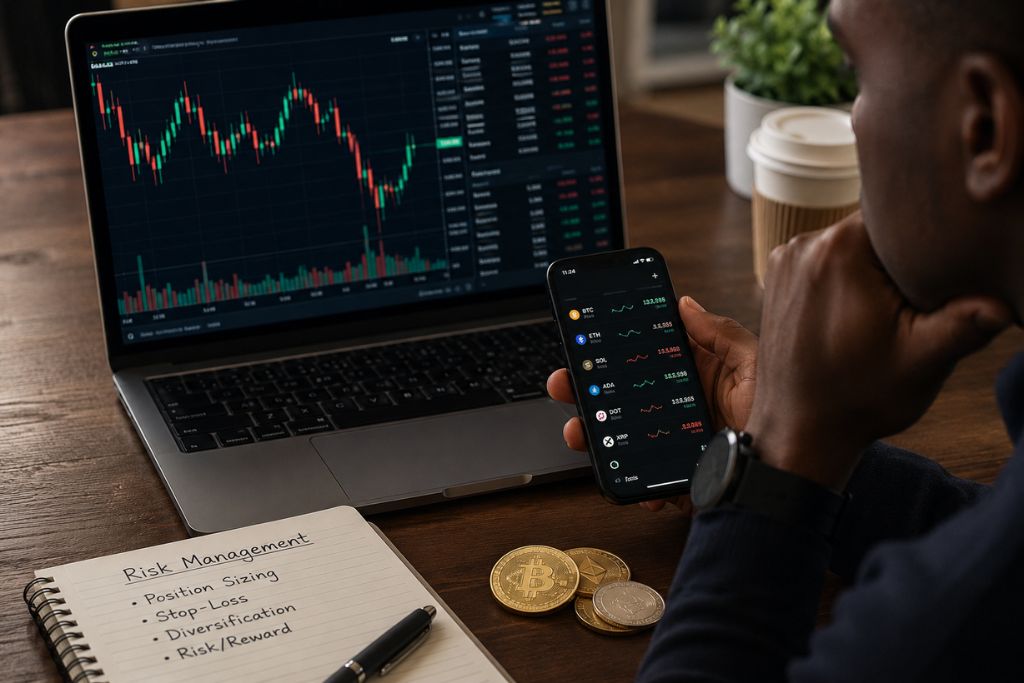
Risk Management for Crypto Asset Traders
Cryptocurrency trading can be exciting, but it can also punish poor risk management very quickly. Prices can move sharply within minutes, liquidity can disappear, and a trade that looked sensible at 10 a.m. may look completely different by lunchtime.
That is why successful crypto trading is not simply about finding the next coin that might rise. Risk management for crypto asset traders is really about deciding how much you can afford to lose before entering a position.
What Is Crypto Trading Risk Management?
Crypto trading risk management is the process of controlling potential losses while preserving enough capital to continue trading. It covers position sizing, stop-loss strategies, portfolio diversification, leverage management and emotional discipline.
Consider a trader with $1,000. Putting the entire amount into one volatile token because someone on social media predicts a 5x return is not a strategy. It is a concentrated bet. A more disciplined trader might risk only a small percentage of the account on a single trade.
That difference matters.
7 Practical Risk Management Rules for Crypto Traders
1. Never Risk Money You Cannot Afford to Lose
Crypto assets can be highly volatile. Trading money should therefore be separate from money needed for school, rent, food, bills or other essential expenses.
2. Use Position Sizing
Rather than asking, “How much can I make?”, ask, “How much am I willing to lose if I am wrong?” Position size should reflect that answer.
3. Set a Stop-Loss Before Entering
A stop-loss can help prevent a manageable trading mistake from becoming a devastating loss. However, it should be based on the market structure and your strategy, not placed randomly.
4. Be Careful With Leverage
Leverage magnifies both gains and losses. For inexperienced traders especially, excessive leverage can turn ordinary market volatility into a major account loss.
5. Avoid Putting Everything Into One Token
Diversification does not eliminate crypto risk, but it can reduce dependence on a single asset, project or market narrative.
You might also be interested in: Is There High Cryptocurrency Adoption in Nigeria?
6. Keep Emotions Out of the Trade
Fear of missing out often encourages traders to buy after dramatic price increases. Panic can then push them to sell at the worst possible moment. Having written rules beforehand makes emotional decisions less likely.
7. Keep a Trading Journal
Record the reason for entering, position size, exit plan and eventual outcome. Over several trades, patterns become easier to spot. Sometimes the biggest problem is not the market. It is the trader repeatedly making the same mistake.
The Bottom Line
Good crypto risk management does not guarantee profitable trades. Nothing can. What it can do is keep individual mistakes from destroying the entire trading account.
For anyone trading Bitcoin, Ethereum, altcoins, or smaller crypto assets, capital preservation should come before chasing extraordinary returns. The trader who survives difficult markets has something the reckless trader eventually loses: another opportunity to participate.
Frequently asked questions
What is the most important risk management rule in crypto trading?
Control how much you can lose on each trade through sensible position sizing and a predefined exit strategy.
Is leverage safe for crypto traders?
Leverage increases both potential returns and potential losses. It should be approached cautiously, particularly by inexperienced traders.
Can diversification eliminate crypto trading risk?
No. Diversification can spread exposure, but cryptocurrency markets remain volatile and correlated during major market movements.
Disclaimer
This article by GreenWare Tech is for educational purposes only and is not financial or investment advice. Cryptocurrency trading involves significant risk, including the possible loss of your investment. Always do your own research and consider professional advice before trading.
