






Apple Music: The Technology That Built It
When Apple launched Apple Music in 2015, many people saw it simply as the company’s answer to the growing streaming economy. But behind the polished interface and curated playlists was an incredibly advanced technology ecosystem designed to compete at global scale.
Today, Apple Music serves millions of subscribers worldwide through a sophisticated combination of cloud computing, artificial intelligence, audio engineering, and tightly integrated software architecture.
Its success is not just about music. It is about engineering precision.
What Is Apple Music?
Apple Music is a subscription-based music streaming platform developed by Apple.
The service offers:
- On-demand music streaming
- Offline downloads
- Curated playlists
- Radio stations
- Spatial audio
- Lossless audio streaming
- Cross-device synchronization
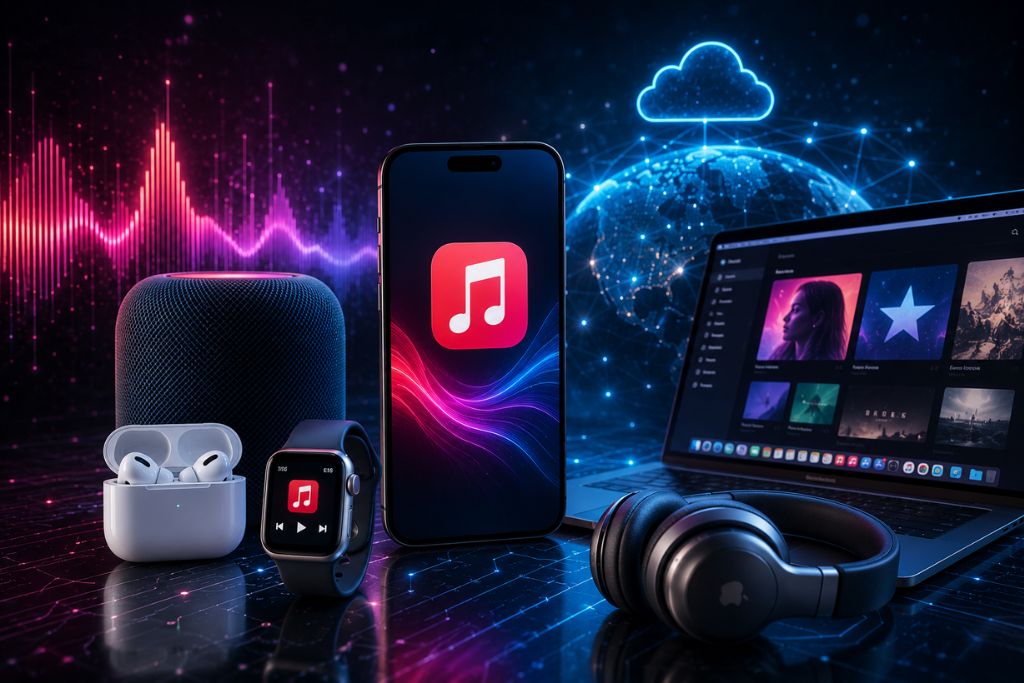
Unlike some competitors, Apple Music was built to operate deeply within Apple’s ecosystem, including:
- iPhone
- iPad
- Mac
- Apple Watch
- HomePod
- CarPlay
This level of ecosystem integration required a carefully engineered software and infrastructure strategy.
The Core Technologies Behind Apple Music
1. Cloud Computing Infrastructure
Streaming millions of songs globally requires enormous cloud infrastructure.
Apple uses a hybrid cloud architecture combining:
- Apple-owned data centers
- CDN technologies
- Third-party cloud partnerships
This infrastructure helps Apple Music:
- Reduce latency
- Improve streaming speeds
- Maintain uptime reliability
- Synchronize user libraries globally
Cloud systems also manage real-time updates across devices.
For example, a playlist edited on an iPhone instantly appears on a MacBook or Apple Watch.
Artificial Intelligence and Personalization
Recommendation engines are now central to every streaming platform.
Apple Music uses AI and machine learning to:
- Recommend songs
- Generate playlists
- Understand listening habits
- Detect music preferences
- Improve search relevance
Unlike platforms heavily focused on algorithmic feeds, Apple combines AI with human editorial curation.
This hybrid approach gives Apple Music a more personalized but controlled discovery experience.
Programming Languages That Built Apple Music
Apple Music’s architecture depends on several major programming languages, each serving different technical purposes.
Swift
Apple created Swift as its modern programming language for iOS and macOS development.
Swift powers large portions of:
- iPhone app interfaces
- Playback systems
- Native Apple integrations
- Mobile performance optimization
Swift became important because it delivers:
- High speed
- Strong security
- Better memory management
- Cleaner syntax for developers
Today, Swift is central to nearly every modern Apple application ecosystem.
Objective-C
Before Swift, Objective-C was Apple’s primary software language.
Many legacy Apple systems and frameworks connected to Apple Music still rely on Objective-C components.
It remains important for:
- Older APIs
- System-level integrations
- Backward compatibility
Apple Music likely uses a combination of Swift and Objective-C internally.
C++
C++ plays a major role in multimedia performance systems.
It is commonly used for:
- Audio processing
- Streaming engines
- Codec management
- Low-level optimization
- High-performance rendering
Lossless and spatial audio technologies require highly optimized processing capabilities, which makes C++ valuable.
Python
Python is heavily used in:
- Machine learning
- Data engineering
- Analytics systems
- Recommendation algorithms
- Internal automation
Like many modern streaming services, Apple Music relies on data-driven personalization powered partly by Python ecosystems.
JavaScript
Apple Music’s web player and web-based services use JavaScript technologies to create responsive user experiences across browsers.
JavaScript supports:
- Interactive playback interfaces
- Dynamic content rendering
- Browser synchronization
- API communication
Audio Engineering Technology
One of Apple Music’s biggest technical differentiators is its focus on audio quality.
The platform supports:
- Lossless audio
- High-resolution audio
- Dolby Atmos
- Spatial Audio
These technologies require advanced audio compression and streaming systems capable of preserving sound quality while maintaining efficient bandwidth usage.
Apple’s engineering investment in audio technology is part of what separates it from many competitors.
Ecosystem Integration
One of the strongest technological advantages of Apple Music is ecosystem control.
Because Apple develops both hardware and software, it can optimize performance across:
- Devices
- Operating systems
- Audio chips
- User interfaces
Features like:
- Siri voice control
- Automatic device syncing
- Handoff support
- Shared ecosystem authentication
all depend on tightly integrated engineering.
This vertical integration is difficult for competitors to replicate.
Data Infrastructure and Analytics
Streaming platforms depend heavily on user data analysis.
Apple Music continuously processes:
- Listening activity
- Playlist interactions
- Search behavior
- Device usage
- Audio preferences
This data helps improve:
- Recommendations
- Streaming quality
- User retention
- Personalized experiences
However, Apple positions itself differently from some competitors by emphasizing user privacy alongside personalization.
Security and Privacy Engineering
Privacy is a major part of Apple’s brand identity.
Apple Music incorporates:
- End-to-end encryption systems
- Secure authentication
- Privacy-focused analytics
- Encrypted cloud synchronization
The company often prioritizes on-device processing where possible to reduce unnecessary data exposure.
This approach shapes many of the platform’s architectural decisions.
You might also be interested in: YouTube Music, The Technology That Built It
Streaming and Content Delivery Technology
Delivering uninterrupted music globally requires sophisticated streaming infrastructure.
Apple Music relies on:
- Adaptive bitrate streaming
- CDN optimization
- Global caching systems
- Real-time buffering management
These systems help ensure stable playback even under weak network conditions.
Why Apple Music’s Technology Matters
Apple Music is not just a streaming platform. It is a reflection of Apple’s broader engineering philosophy:
- Tight hardware-software integration
- Performance optimization
- Privacy-focused architecture
- Premium audio experiences
- Scalable cloud infrastructure
Its technical foundation enables the seamless experience users often take for granted.
Final Thoughts
Its success comes from far more than licensing music catalogs. Behind the platform is a sophisticated stack of technologies involving cloud computing, machine learning, data engineering, audio science, and scalable backend systems.
Programming languages like Swift, Objective-C, Python, JavaScript, and C++ each contribute to different layers of the ecosystem.
Together, they power one of the world’s most advanced digital music experiences.

Author