



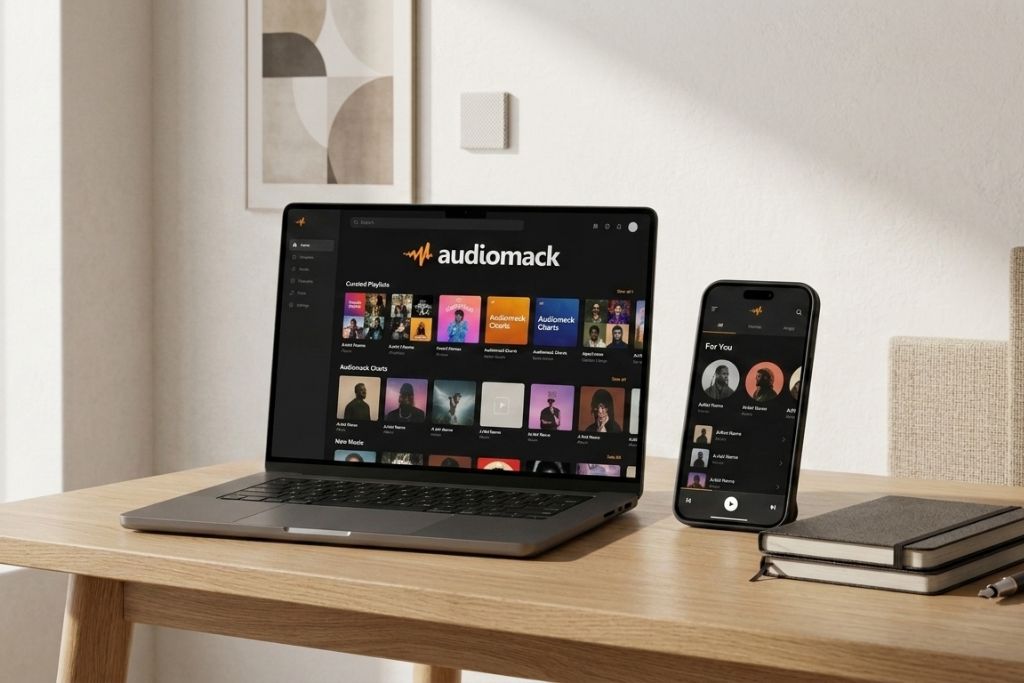
Audiomack: The Technology That Built It
Audiomack has become one of the most influential music streaming platforms for emerging artists, especially across Africa, the Caribbean, and global hip-hop communities.
Unlike traditional streaming services that focused heavily on established labels, Audiomack positioned itself as a creator-first platform where independent artists could upload music directly and build audiences organically.
Today, millions of listeners use Audiomack to stream songs, mixtapes, podcasts, and albums across mobile and web platforms.
But behind its fast streaming experience and global accessibility lies a powerful technology stack designed for scale, speed, and music discovery.
What Is Audiomack?
Founded in 2012, Audiomack is a music streaming and audio discovery platform that allows artists to upload content directly while enabling fans to stream music for free.
The platform became popular because it gave unsigned and rising artists a chance to grow without depending entirely on major record labels.
Over time, Audiomack expanded aggressively into African markets, particularly Nigeria, Ghana, and South Africa, where mobile-first streaming consumption continues to rise rapidly.
Today, Audiomack competes with larger platforms by focusing on:
- Emerging artists
- Fast mobile streaming
- Offline listening
- Personalized discovery
- Creator analytics
- Lightweight app performance
The Core Technologies Behind Audiomack
Building a global streaming platform requires far more than simply uploading songs online.
Audiomack depends on a combination of:
- Backend infrastructure
- Cloud computing
- Audio delivery systems
- Recommendation algorithms
- Mobile engineering
- Data analytics
All working together in real time.
Programming Languages That Built Audiomack
One of the most important parts of Audiomack’s technology stack is its programming architecture.
Like many modern streaming companies, Audiomack uses multiple programming languages for different functions across its ecosystem.
Ruby
Ruby has historically played a major role in Audiomack’s backend development.
Ruby, especially through the Ruby on Rails framework, allows developers to build web applications quickly and efficiently.
This likely helped Audiomack scale rapidly during its early growth phase.
Ruby is popular among startups because it enables:
- Fast product development
- Rapid testing
- Efficient database management
- Scalable APIs
JavaScript
JavaScript powers much of the interactive experience across web applications.
Audiomack’s web platform depends heavily on JavaScript for:
- Dynamic user interfaces
- Real-time interactions
- Audio controls
- Search experiences
- Notifications
Modern frontend frameworks built around JavaScript help streaming apps feel smooth and responsive.
Python
Python is widely used across streaming platforms for:
- Machine learning
- Recommendation systems
- Data analytics
- Automation
- AI workflows
Audiomack’s music discovery and recommendation systems likely rely on Python-powered data models that analyze listener behavior and engagement patterns.
Kotlin and Java
For Android development, Audiomack relies on technologies commonly used within the Android ecosystem.
Kotlin and Java help power:
- Android app functionality
- Mobile performance optimization
- Offline downloads
- Streaming reliability
- Push notifications
Since Africa remains largely mobile-first, Android optimization is especially important for Audiomack’s growth.
Swift
On iOS devices, Swift helps power Audiomack’s Apple ecosystem experience.
Swift enables:
- Faster iOS app performance
- Better security
- Improved memory management
- Smooth mobile interfaces
Cloud Infrastructure and Scalability
Music streaming platforms process enormous amounts of data every second.
Audiomack must handle:
- Millions of audio streams
- Concurrent users
- Global traffic spikes
- Content uploads
- Recommendation processing
This requires scalable cloud infrastructure.
Like many modern platforms, Audiomack depends heavily on cloud computing systems that support:
- Distributed servers
- Load balancing
- Storage optimization
- Fast content delivery
Cloud infrastructure ensures users in Lagos can stream songs almost instantly without major buffering delays.
Audio Streaming Technology
Streaming audio efficiently is technically complex.
Audiomack uses advanced streaming systems to:
- Compress audio files
- Reduce buffering
- Optimize playback
- Improve mobile data efficiency
- Enable adaptive streaming quality
This matters greatly in regions where internet speeds fluctuate frequently.
Efficient compression and delivery systems help users stream music even on lower bandwidth networks.
Recommendation Algorithms and AI
Music discovery is one of Audiomack’s biggest strengths.
Recommendation systems analyze:
- Listening behavior
- Search patterns
- Skips
- Likes
- Playlists
- Regional trends
Artificial intelligence and machine learning models then personalize music suggestions for individual users.
These systems help independent artists gain visibility organically.
Mobile-First Engineering
Audiomack’s expansion across Africa succeeded partly because the platform prioritized mobile optimization early.
Many users stream primarily on smartphones rather than desktop computers.
The app was therefore engineered for:
- Lightweight performance
- Faster loading times
- Reduced data consumption
- Offline listening
- Battery efficiency
This mobile-first strategy helped the platform grow strongly in emerging markets.
Data Analytics and User Insights
Modern streaming companies are deeply data-driven.
Audiomack collects analytics to understand:
- User engagement
- Listening duration
- Trending artists
- Retention patterns
- Geographic behavior
These insights help improve recommendations, marketing, and platform performance.
Artists also benefit from creator analytics that show how audiences interact with their music.
You might also be interested in: YouTube Music, The Technology That Built It
Security and Content Protection
Music platforms face constant security challenges.
Audiomack must protect:
- User accounts
- Payment systems
- Uploaded content
- Licensing systems
- Streaming infrastructure
This involves:
- Encryption
- Authentication systems
- Cloud security
- Anti-abuse monitoring
- Data protection frameworks
Security becomes even more important as streaming platforms expand globally.
The Future of Audiomack Technology
The future of streaming platforms will likely involve:
- AI-generated recommendations
- Smarter personalization
- Voice-powered discovery
- Better creator monetization
- Spatial audio
- Deeper analytics
Audiomack is positioned strongly because it understands emerging music markets that many global competitors initially overlooked.
Its creator-first approach, mobile optimization, and scalable engineering continue to drive its global relevance.
Final Thoughts
Audiomack’s success is not just about music. It is about technology, infrastructure, and understanding how digital audiences behave.
Behind every stream lies an ecosystem powered by programming languages like Ruby, JavaScript, Python, Kotlin, Java, and Swift, alongside cloud systems, machine learning, and mobile engineering.
The platform proves that modern music streaming is as much a technology business as it is an entertainment business.
As digital music consumption continues growing globally, platforms like Audiomack will keep evolving through AI, data science, and scalable software engineering.
